“I’ve seen this go from a hole in the ground to a mountain.”
For Brian Burandt, CEO of Connexus Energy, the Anoka-Ramsey Closed Landfill is more than a project site. His grandfather once hayed the land before it became a landfill, and today, that same property is generating renewable energy for the community.
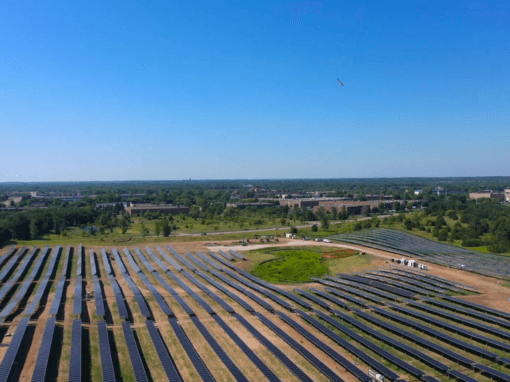
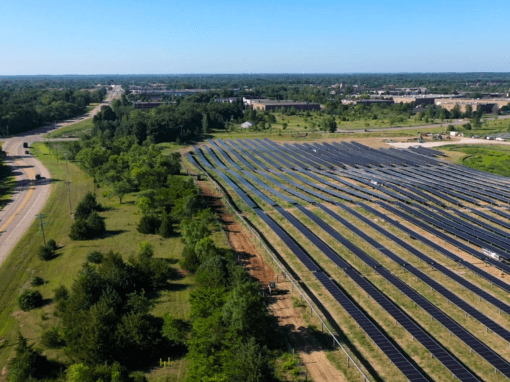
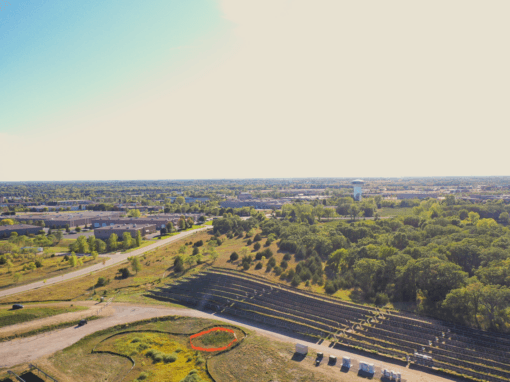
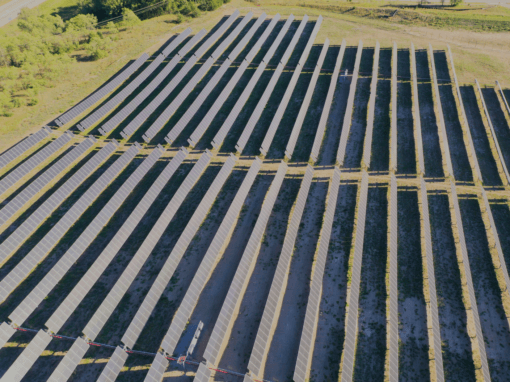
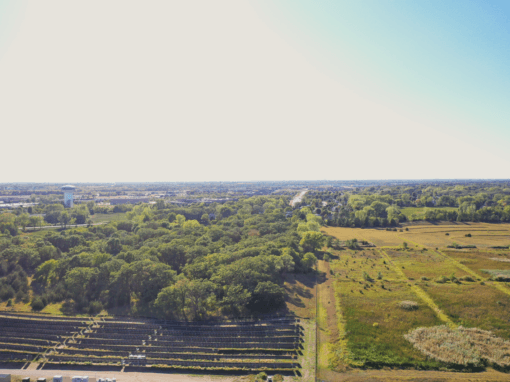
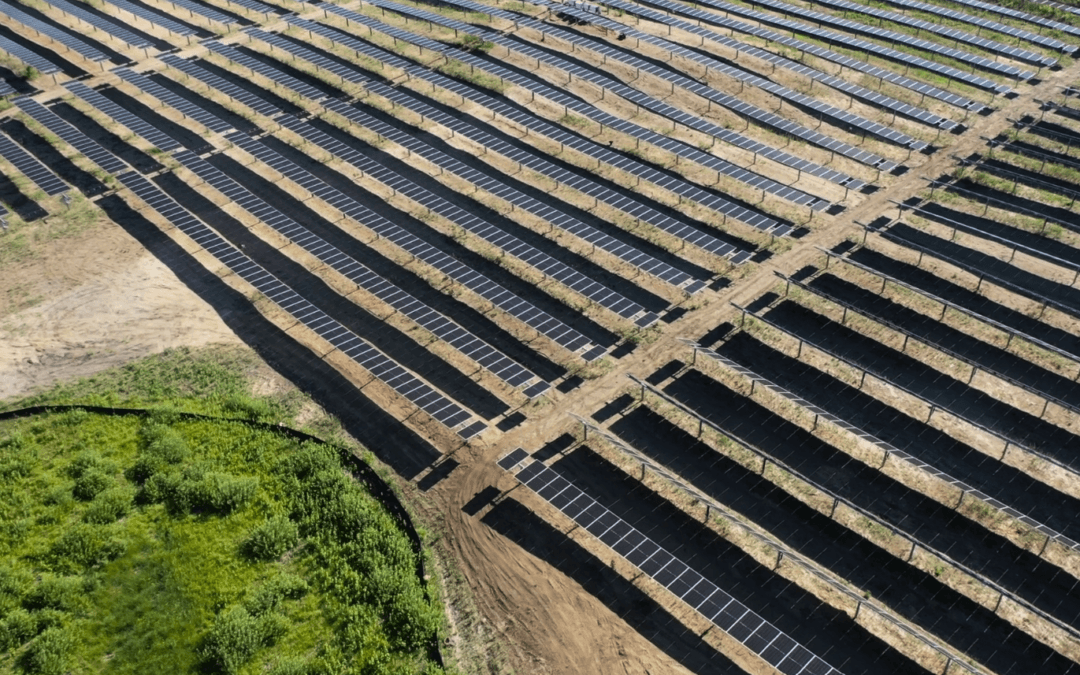
Roughly 25 acres of the landfill’s buffer area are now home to Ramsey II Renewable Station, a 4.125 MW (AC) / 5.046 MW (DC) solar array. Cedar Creek Energy designed, procured, and constructed the project on behalf of owner Kearsarge Energy and will continue supporting its long-term performance through operations and maintenance services.
A Decade in the Making
The path to Ramsey II Renewable Station began nearly a decade before construction started.
Connexus Energy first approached the Minnesota Pollution Control Agency (MPCA) about leasing the Anoka-Ramsey Closed Landfill for solar development. The idea quickly encountered a challenge: decades-old bonding restrictions tied to the site’s original financing made redevelopment extremely difficult.
Rather than abandoning the concept, stakeholders continued working toward a solution.
In 2019, the Minnesota Legislature appropriated $300,000 to the Environmental Quality Board (EQB) to study the feasibility of solar development on closed landfills managed by the MPCA. The study grew out of a two-day workshop in Ramsey that brought together representatives from state agencies, nonprofit organizations, industry groups, utilities, and local leaders to explore how these underutilized sites could be repurposed.
The EQB’s final report, completed in December 2020, ranked the Anoka-Ramsey Closed Landfill fifth among approximately 110 sites evaluated statewide. The site’s primary obstacle remained the existing bonding restrictions.
Connexus continued working with legislators, ultimately helping secure funding in 2021 to retire the remaining bonds and authorize agreements supporting a solar pilot project at the landfill. Even after legislative approval, additional work was required to navigate the financial and legal steps needed to make redevelopment possible.
Clearing the Path
With the bonding barriers removed, attention shifted to project planning and permitting.
Lease negotiations, led on the state’s side by Hans Neve, MPCA Closed Landfill Program Manager, balanced renewable energy development with long-term land stewardship. The final site layout was designed to preserve existing oak savannas while keeping portions of the surrounding property available for future industrial development.
The option to lease was signed in November 2023, and the final lease was executed on January 26, 2026.
Local approvals presented another challenge. An earlier comprehensive planning update had created uncertainty around permitted land uses, resulting in an initial rezoning vote that did not pass. After city officials toured the site and reviewed plans that incorporated the property’s natural topography to help screen the array from view, the rezoning effort ultimately received approval.
As Burandt later reflected, “We wouldn’t have had a project here” without that support.
Cedar Creek Brings the Project to Life
In March 2024, Connexus selected Cedar Creek Energy to design, procure, and construct the solar array.
Groundbreaking took place on March 2, 2026. Just six months later, the project reached commercial operation on September 2, demonstrating Cedar Creek’s ability to deliver on an accelerated schedule while navigating a complex site.
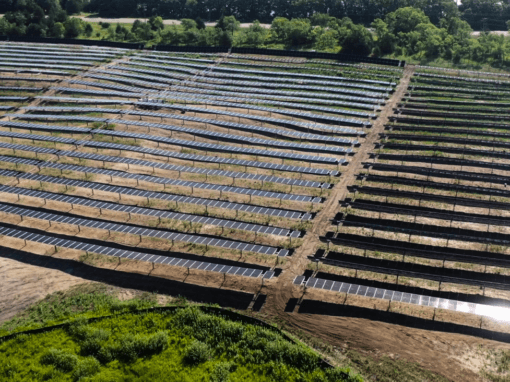
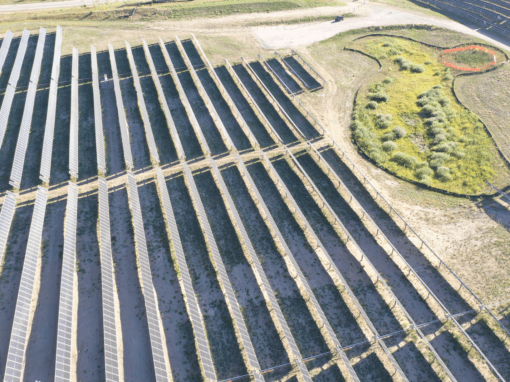
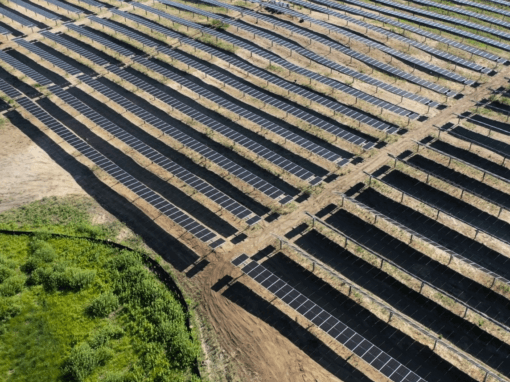
A significant challenge was the terrain itself. The project sits adjacent to the landfill cap, where uneven ground conditions required a thoughtful design approach. To accommodate the terrain, Cedar Creek specified terrain-following single-axis tracker technology, allowing the panels to adapt to the site’s natural contours while following the sun throughout the day. This approach also reduced the need for extensive site grading, helping limit site disturbance as well as the cost and time associated with major grading work.
The array includes approximately 8,700 bifacial solar panels, capable of capturing reflected sunlight from the ground surface, including winter snow cover. The system is supported by roughly 1,860 driven I-beam piles installed approximately 10 feet deep across the roughly 25-acre site.
Construction also required extensive tree clearing and grubbing work, adding another layer of complexity to the build.
Despite the demanding schedule and site conditions, the project was completed with zero recordable safety incidents.
At the September ribbon-cutting ceremony, Burandt recognized the team’s accomplishment:
“We thank Cedar Creek for developing this project and doing it safely.”
Ramsey II Renewable Station received permission to operate and officially entered commercial operation on September 2.
According to Connexus Energy, the project is expected to generate approximately 7,900 megawatt-hours of electricity annually. In a typical year, that output is equivalent to powering roughly 750 homes, with peak production capable of serving approximately 2,000 homes in Ramsey.
Cedar Creek’s Long-Term Commitment
Cedar Creek Energy’s involvement does not end with construction.
Under a long-term operations and maintenance agreement, Kearsarge Energy oversees performance monitoring and financial reporting, while Cedar Creek remains responsible for maintaining the site and supporting reliable system performance.
That work includes annual inspections of solar equipment, weather stations, drainage systems, and site security infrastructure, as well as preventative maintenance, troubleshooting, repairs, vegetation management, and snow removal.
By remaining involved after commissioning, Cedar Creek helps ensure the facility continues operating reliably for years to come.
A Team Effort
Ramsey II Renewable Station reflects years of collaboration among public agencies, private developers, utilities, and local government partners.
“This project represents what’s possible when utilities, developers, regulators and state leaders work together toward long-term energy solutions,” said Alex Gast, COO of Cedar Creek Energy.
The project brought together the State of Minnesota as landowner, the City of Ramsey, the MPCA, Connexus Energy, Kearsarge Energy, and Cedar Creek Energy.
As Burandt noted during the ribbon-cutting ceremony:
“Kearsarge stepped in late in the game, but they are now the owner and operator of the system. Thanks to them.”
Kearsarge Energy CEO Andrew Bernstein emphasized the importance of collaboration in bringing projects like Ramsey II to completion:
“Collaborating with forward-thinking energy leaders like Connexus and Cedar Creek has been instrumental in helping us develop, finance, own, and operate energy solutions across the country. It is pivotal in helping communities meet growing energy demands.”
What stands out about Ramsey II is the persistence required to make it happen. Regulatory hurdles, financing challenges, permitting efforts, and years of coordination could have stalled the project at multiple points. Instead, the partners remained committed and ultimately brought the project to life.
A Living Landscape
Solar generation is only one part of the site’s story.
A deep-rooted native pollinator seed mix was planted at Ramsey II Renewable Station in September 2026, with additional plantings planned for spring 2027. The effort continues a pollinator-friendly approach Connexus has incorporated across its solar sites since 2014.
The benefits extend beyond aesthetics. Other Connexus solar facilities support active beehives that have become productive honey producers, with honey finding its way into locally sold products. Once vegetation at Ramsey II has had time to establish, Connexus plans to evaluate adding hives at this site as well.
What Makes This Project Special
For Burandt, the project carries personal significance.
His grandfather once farmed and hayed land near the site before it became a landfill. Growing up, he heard stories about what the area looked like before the landfill existed. Today, he passes the site every day and has watched its transformation firsthand.
“It’s pretty special to me,” he said.
For Cedar Creek Energy, Ramsey II represents the company’s first project within the MPCA Closed Landfill Program and demonstrates how underutilized land can be transformed into a productive renewable energy asset. The roughly 25-acre project highlights Cedar Creek’s ability to navigate complex sites while delivering reliable energy infrastructure.
For Kearsarge Energy, the project aligns with its mission of developing infrastructure that creates lasting benefits for communities.
For the City of Ramsey, it provides a new purpose for land that had sat largely unused for years.
For the State of Minnesota, lease revenue from the project supports future solar development opportunities within the MPCA Closed Landfill Program, helping create a framework that can be replicated at other sites across the state.
Looking Ahead
Ramsey II Renewable Station demonstrates what can happen when long-term partnerships, creative problem-solving, and technical expertise come together. What was once overlooked land is now generating clean, local power for Minnesota communities while creating a model for future redevelopment opportunities across the state.
For Cedar Creek Energy, the project showcases how thoughtful engineering, disciplined execution, and long-term operational support can help transform challenging sites into productive renewable energy assets. As more closed landfills across Minnesota seek a second life, Ramsey II stands as an example of what’s possible when the right partners come together to get it done.